
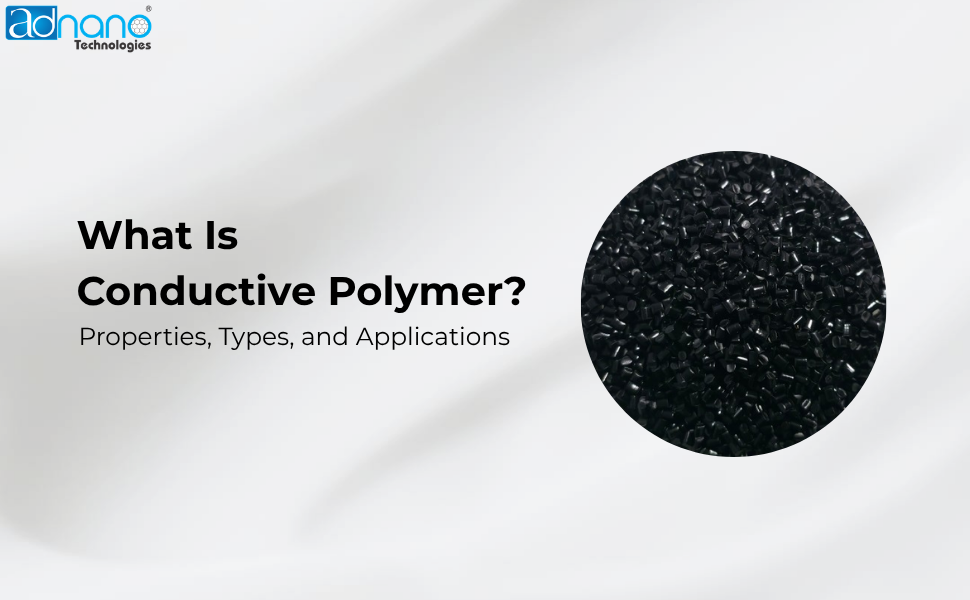
A conductive polymer is a polymer material capable of conducting electricity, either through its molecular structure or by incorporating electrically conductive additives.
Unlike traditional polymers that block electrical current, conductive polymers allow electrons to move through the material under controlled conditions. This unique capability combines the lightweight nature, corrosion resistance, and design flexibility of plastics with electrical functionality.
Conductive polymers generally fall into two main categories:
1. Intrinsically Conductive Polymers (ICPs)
These polymers conduct electricity because of their unique chemical backbone containing conjugated double bonds. After appropriate chemical doping, electrons become mobile, allowing electrical conductivity without additional fillers.
Common examples include:
- Polyaniline (PANI)
- Polypyrrole (PPy)
- PEDOT:PSS
- Polythiophene
- Polyacetylene
These materials are widely used in flexible electronics, sensors, OLEDs, and organic electronic devices.
2. Conductive Polymer Masterbatch
The majority of industrial products use conductive polymer compounds, where conventional thermoplastics are blended with conductive fillers to create electrically conductive pathways.
Common conductive fillers include:
- Carbon black
- Graphite
- Graphene
- Carbon nanotubes (CNTs)
- Silver particles
- Copper particles
- Stainless steel fibers
These compounds offer an excellent balance of conductivity, mechanical performance, durability, processability, and cost, making them suitable for applications such as conductive packaging, automotive components, electronic housings, and conductive masterbatches.
Why Are Most Plastics Non-Conductive?
Most common engineering plastics are excellent electrical insulators.
Materials such as:
- Polyethylene (PE)
- Polypropylene (PP)
- ABS
- Polycarbonate (PC)
- Nylon (PA)
They contain electrons that are tightly bound within their molecular structure. Since these electrons cannot move freely, electrical current cannot pass through the material.
Conductive polymers overcome this limitation by introducing mechanisms that enable charge carriers to travel through the material.
How Does a Conductive Polymer Work?
Electrical conductivity in polymers is achieved using two different approaches.
Intrinsic Conductivity
Certain polymers naturally possess alternating single and double bonds known as conjugated bonds. After chemical doping, these conjugated structures allow electrons to move freely, resulting in electrical conductivity.
This mechanism is commonly found in advanced electronic materials such as:
- Polyaniline
- Polypyrrole
- PEDOT:PSS
- Polythiophene
These materials are widely used in wearable electronics, flexible displays, biosensors, and printed electronics.
Conductive Fillers
The most widely adopted industrial approach involves incorporating conductive fillers into thermoplastic polymers.
As the filler concentration increases, the particles begin to connect with one another. Once they reach the percolation threshold, they create a continuous conductive network that allows electricity to flow through the material.
Common conductive fillers include:
- Carbon black
- Graphene
- Carbon nanotubes
- Graphite
- Silver
- Copper
- Stainless steel fibers
This approach forms the basis of modern conductive polymer masterbatches and engineering compounds used across multiple industries.
Key Properties of Conductive Polymers
Conductive polymers offer an exceptional combination of electrical, mechanical, and processing performance.
Electrical Conductivity
Depending on the filler type and loading, conductivity can range from static dissipative levels to highly conductive grades suitable for signal transmission.
Typical functions include:
- Electrostatic discharge (ESD) protection
- EMI shielding
- Static charge dissipation
- Electrical grounding
- Signal transmission
Lightweight
Compared to metals, conductive polymers significantly reduce component weight without compromising electrical functionality.
This makes them particularly valuable in:
- Electric vehicles
- Aerospace
- Consumer electronics
Corrosion Resistance
Unlike metals, conductive polymers resist corrosion, oxidation, and chemical attack, making them suitable for harsh environments including marine applications, chemical processing equipment, and outdoor installations.
Excellent Processability
Most conductive polymer compounds can be manufactured using conventional polymer processing techniques, including:
- Injection molding
- Extrusion
- Blow molding
- Compression molding
- Thermoforming
No specialized production equipment is typically required.
Design Flexibility
Complex shapes that are expensive or impossible to manufacture from metal can be molded directly using conductive polymers, allowing electrical functionality to be integrated into lightweight plastic components.
Tunable Conductivity
Engineers can precisely tailor conductivity by adjusting:
- Filler concentration
- Filler type
- Polymer matrix
- Dispersion quality
This enables customized material solutions for specific applications.
Types of Conductive Polymers
Intrinsically Conductive Polymers
Examples include:
- Polyaniline (PANI)
- Polypyrrole (PPy)
- PEDOT:PSS
- Polyacetylene
- Polythiophene
Typical applications include OLED displays, biosensors, flexible electronics, organic solar cells, and supercapacitors.
Carbon Black Conductive Polymers
Carbon black remains one of the most economical conductive fillers.
Advantages
- Cost-effective
- Reliable ESD performance
- Good conductivity
- Easy processing
Applications
- Conductive packaging
- Fuel system components
- Industrial containers
Carbon Nanotube (CNT) Conductive Polymers
Carbon nanotubes deliver high conductivity at significantly lower loading levels than conventional fillers.
Key benefits
- Superior electrical conductivity
- High mechanical strength
- Lightweight
- Excellent EMI shielding
- Improved processing efficiency
Applications
- Automotive electronics
- Aerospace components
- Conductive packaging
- Battery materials
- Conductive coatings
- High-performance polymer compounds
- Smart composites
Conductive Polymer Masterbatch Range from Adnano Technologies
At Adnano Technologies, we manufacture advanced Carbon Nanotube (CNT)-based Conductive Masterbatches engineered for specific polymer systems. Each formulation is optimized to deliver excellent electrical conductivity, uniform nanotube dispersion, and superior mechanical properties while maintaining compatibility with the intended polymer matrix.
Conductive PA6 Masterbatch
Our Carbon Nanotube-PA6 Conductive Masterbatch is specially designed for engineering plastics that demand both high electrical conductivity and outstanding mechanical performance. The optimized CNT dispersion ensures reliable conductivity while preserving the strength and durability of polyamide components.
Key Applications
- Automotive components
- Electronic housings
- Industrial machinery parts
- Engineering plastic products
Conductive PP Masterbatch
The Carbon Nanotube-PP Conductive Masterbatch is developed specifically for polypropylene-based applications requiring effective electrostatic discharge (ESD) protection and controlled electrical conductivity. It offers excellent processability while maintaining the lightweight and versatile characteristics of polypropylene.
Key Applications
- Automotive interior components
- Conductive packaging trays
- Industrial containers
- Consumer electronics components
Conductive LLDPE Masterbatch
Our Carbon Nanotube-LLDPE Conductive Masterbatch is formulated for extrusion, flexible packaging, and film applications where lightweight conductivity and static dissipation are essential. The masterbatch provides uniform nanotube distribution, enabling consistent electrical performance throughout the finished product.
Key Applications
- Antistatic films
- Conductive packaging solutions
- Industrial liners
- Flexible conductive products
Applications of Conductive Polymers
The combination of electrical functionality and lightweight performance has made conductive polymers indispensable across multiple industries.
- Electronics
- Automotive
- Medical Devices
- Packaging
- Aerospace
- Energy Storage
Advantages of Conductive Polymers
Compared with conventional metals, conductive polymers offer numerous benefits:
- Lightweight construction
- Corrosion resistance
- Excellent design flexibility
- Easier manufacturing
- Reduced assembly costs
- Adjustable electrical conductivity
- Superior chemical resistance
- Compatibility with high-volume polymer processing
Conclusion
Conductive polymers have revolutionized modern material engineering by combining the versatility of plastics with controlled electrical conductivity. Whether developed through intrinsically conductive molecular structures or enhanced using advanced fillers such as graphene, carbon nanotubes (CNTs), and carbon black, these materials deliver lightweight, corrosion-resistant, and highly adaptable solutions for today’s most demanding applications.
As advancements in nanotechnology and polymer science continue, conductive polymers will play an even greater role in enabling next-generation innovations in electric mobility, smart electronics, renewable energy, aerospace, and industrial automation. Their unique combination of performance, processability, and design flexibility makes them one of the most promising material technologies shaping the future of advanced manufacturing.