
Have you ever wondered how polymer products get their vibrant colors, outdoor weather resistance, or even the ability to safely conduct electricity? Unfinished, natural polymer (called “virgin resin”) is usually just plain, colorless, and basic. To turn it into high performance products like car dashboards, food packaging, or electronic trays manufacturers use a secret ingredient: Polymer Masterbatch.
Here is a simple breakdown of what masterbatch is, how it works, and why it is essential to the modern polymer industry.
What Is Polymer Masterbatch?
Think of a polymer masterbatch like a super-concentrated flavor cube used in cooking. You wouldn’t eat a bouillon cube by itself, but dropping one into a pot of water flavors the entire soup evenly.
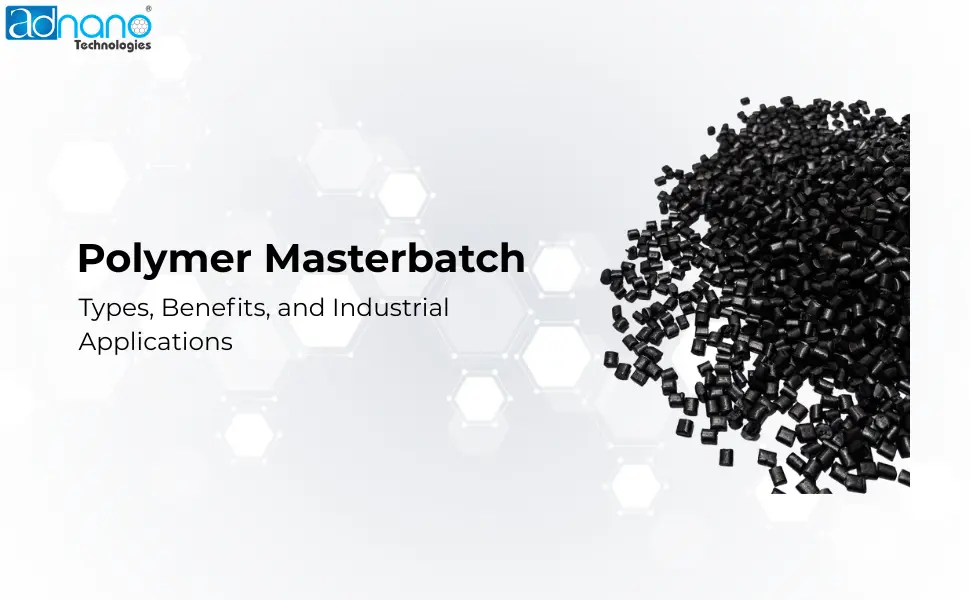
In polymer manufacturing, a masterbatch is a solid, easy to handle pellet that contains a massive concentration of pigments (for color), functional additives (like UV protection), or special fillers. These concentrates are encapsulated inside a “carrier resin” a base polymer that blends easily with the rest of the manufacturing material.
How is it used?
- The Blend: A small amount of masterbatch pellets (usually just 1% to 5% of the total mix) is added to pure, raw polymer resin.
- The Melt: Inside a molding or extrusion machine, heat melts the pellets together.
- The Result: The concentrated color or additive spreads out (homogenizes) perfectly and evenly across the entire polymer product.
Why Use Masterbatch Instead of Raw Powders?
In the early days of polymer manufacturing, companies dumped raw pigment powders and chemical additives directly into their machines. Today, almost everyone uses pelletized masterbatch because it solves several major manufacturing headaches:
- No More Clumps (Superior Dispersion): Raw powders often clump up, causing streaks, spots, or weak areas in the final polymer. Masterbatch is pre-mixed, ensuring a smooth and even finish every time.
- A Cleaner, Safer Workplace: Fine chemical powders create clouds of dust that can be hazardous for workers to breathe and can contaminate neighboring machines. Solid pellets are completely dust free and safe to handle.
- No Wasted Money (Precise Dosing): Because they are uniform pellets, manufacturers can measure exactly how much they need. This prevents using too much expensive additive and reduces material scrap.
- Longer Shelf Life: The outer resin of the pellet acts as a protective shell, keeping sensitive chemical additives safe from air and moisture until they are ready to be melted.
The 4 Main Types of Masterbatches
Depending on what a polymer product needs to do, manufacturers choose from four main categories:
1. Color Masterbatches
- What they do: Give polymer its specific color, from everyday shades to special metallic, pearlescent, or glow in the dark effects.
- Common uses: Toys, shampoo packaging, household goods, and branded containers.
2. Additive Masterbatches
These act as “vitamins” for polymer, adding special properties to survive tough environments:
- UV Stabilizers: Prevent outdoor polymer (like patio furniture or agricultural films) from fading, cracking, or becoming brittle in the sun.
- Flame Retardants: Stop polymer from easily catching fire, which is crucial for building cables and electronics.
- Antimicrobials: Stop bacteria and fungi from growing on medical devices and food packaging.
- Antioxidants: Stop polymer from degrading and weakening when exposed to high heat during manufacturing.
3. Filler & Standard Masterbatches
- White & Black Masterbatches: Made with Titanium Dioxide (white) or Carbon Black, these provide solid color, opacity, and basic UV protection.
- Mineral Fillers: Made from calcium carbonate (chalk) or talc, these pellets are mixed in to reduce the amount of expensive polymer required, while also making the final product stiffer.
4. Conductive Masterbatches
Standard polymer are natural electrical insulators—meaning they trap static electricity. Specialty conductive masterbatches mix advanced nanomaterials into the polymer so it can safely conduct electricity or dissipate static shocks.
Where Are They Used?
You interact with masterbatch enhanced polymer every day. Here is how different industries rely on them:
| Industry | Common Products | Why Masterbatch is Needed |
| Packaging | Food containers, plastic bags, shampoo bottles | For clean branding colors, UV protection, and keeping films from sticking together. |
| Automotive | Car dashboards, under then hood parts, bumpers | For UV resistance against sun fading, scratch resistance, and flame retardancy. |
| Electronics | Computer casings, sensor housings, shipping trays | To prevent static shocks from destroying delicate microchips. |
| Agriculture | Greenhouse films, drip irrigation pipes | To protect outdoor plastic from breaking down under intense sunlight and weather. |
Conductive Polymer Masterbatch by Adnano Technologies
As we move toward a world of electric vehicles (EVs), smart devices, and automated electronics, managing static electricity is more critical than ever. A simple static spark from an ordinary plastic tray can instantly ruin an expensive microchip or ignite hazardous chemicals.
Leading the Way: Adnano Technologies While standard polymers block electricity, Adnano Technologies specializes in engineering high performance conductive masterbatches. By blending advanced nanomaterials like Carbon Nanotubes (CNTs) and highly conductive carbon into polymer carrier pellets, Adnano transforms standard polymers into materials that can safely conduct electricity and dissipate static.
Why Adnano’s Conductive Solutions Stand Out:
- Low Loading Required: They achieve electrical conductivity using a very small amount of additive, meaning the polymer stays lightweight, tough, and durable.
- Reliable ESD Protection: Perfect for cleanrooms, electronics manufacturing trays, and chemical storage where Electrostatic Discharge (ESD) is a safety hazard.
- EMI Shielding: They protect sensitive electronics (like automotive radar and aerospace sensors) from electromagnetic interference.
Conclusion
Polymer masterbatch is the foundation of modern polymers manufacturing, enabling manufacturers to achieve precise coloration, enhanced functionality, improved processing efficiency, and greater product durability.
Adnano Technologies is a leading manufacturer of Conductive Polymer Masterbatch, engineered to impart electrical conductivity, static dissipation, and electromagnetic shielding properties to polymer products. Our advanced conductive masterbatch solutions are designed for applications in electronics packaging, automotive components, industrial containers, ESD safe products, and specialized engineering polymers, delivering consistent performance, excellent dispersion, and reliable processing across diverse polymer systems.